
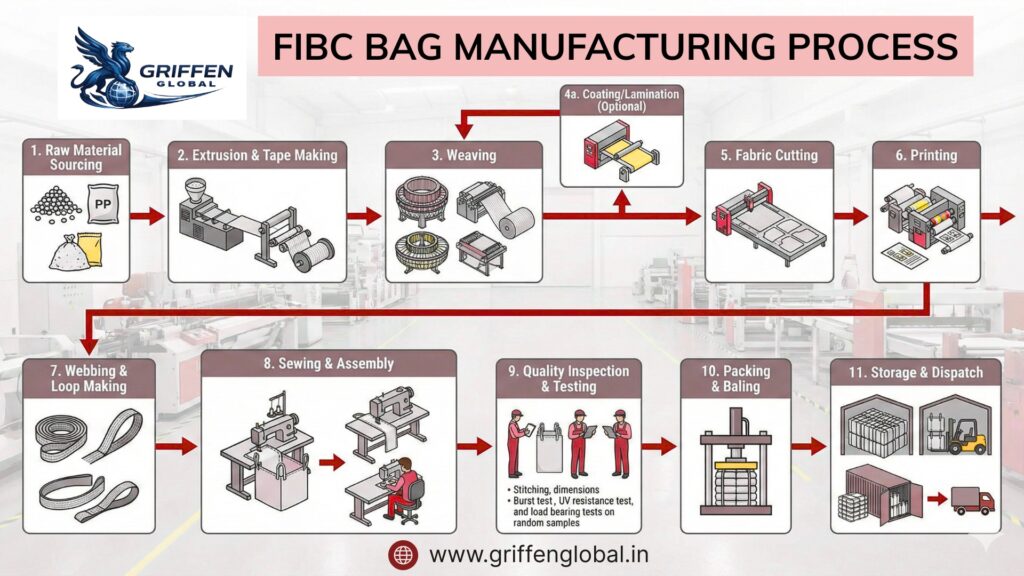
FIBC Bag Manufacturing Process Explained
Flexible Intermediate Bulk Containers (FIBC bags), also known as jumbo bags, are manufactured through a structured production process to ensure strength, durability, and safe load handling.
1. Raw Material Sourcing
Production begins with sourcing high-grade polypropylene (PP) granules. The quality of raw material directly affects tensile strength, durability, and overall bag performance.
2. Extrusion & Tape Making
Polypropylene granules are melted and extruded into thin tapes. These tapes are stretched and cooled to achieve the required strength and flexibility for weaving.
3. Weaving
The tapes are woven into fabric using circular or flat looms. The weaving density determines the bag’s load capacity and resistance to tearing.
4. Coating / Lamination (Optional)
For moisture-sensitive products, the woven fabric is laminated or coated. This step enhances barrier protection and improves product safety during storage and transport.
5. Fabric Cutting
Large rolls of woven fabric are cut into panels according to bag dimensions and design specifications.
6. Printing
Brand logos, handling instructions, safety details, and product information are printed on panels using industrial printing machines.
7. Webbing & Loop Making
Strong webbing tapes are manufactured and stitched into lifting loops. These loops are critical for safe lifting and transportation.
8. Sewing & Assembly
Panels, loops, liners, and filling/discharge spouts are stitched together using heavy-duty industrial sewing machines to form the complete bag.
9. Quality Inspection & Testing
Each batch undergoes strict testing, including:
- Stitching strength check
- Dimension verification
- Burst and load test
- UV resistance test
This ensures compliance with international safety standards.
10. Packing & Baling
Finished bags are folded, pressed, and bundled into compact bales for easy handling and shipping.
11. Storage & Dispatch
Packed bags are stored in a clean warehouse and then dispatched to customers worldwide according to shipment schedules.